

Beyond the Workshop: Training the Front Line for EV Incidents
- Mark Jones
- Jan 8
- 3 min read

Electric vehicle (EV) battery technology continues to advance, with system voltages now exceeding 1,000 volts DC. Given the inherent risks associated with high-voltage systems in electric and hybrid vehicles, it is entirely appropriate that vehicle technicians are required to demonstrate competence and undertake formal training.
Frontline responders—firefighters, paramedics, police officers and recovery operators—are routinely exposed to the same vehicles in far more hazardous conditions. Yet, unlike technicians, they do not necessarily have an equivalent, structured training pathway tailored to these environments or their specific job roles.
Firefighters and HazMat teams are among the most highly trained professionals in the world. However, they are not the sole custodians of EV incident response. How much of their training and hard-won experience is shared with the wider response chain? Police officers, ambulance crews, recovery operators, salvage yard owners and insurance assessors all play critical roles in managing EVs from first impact through to storage, assessment and dismantling. Risk does not end when the flames are out or the vehicle leaves the roadside.
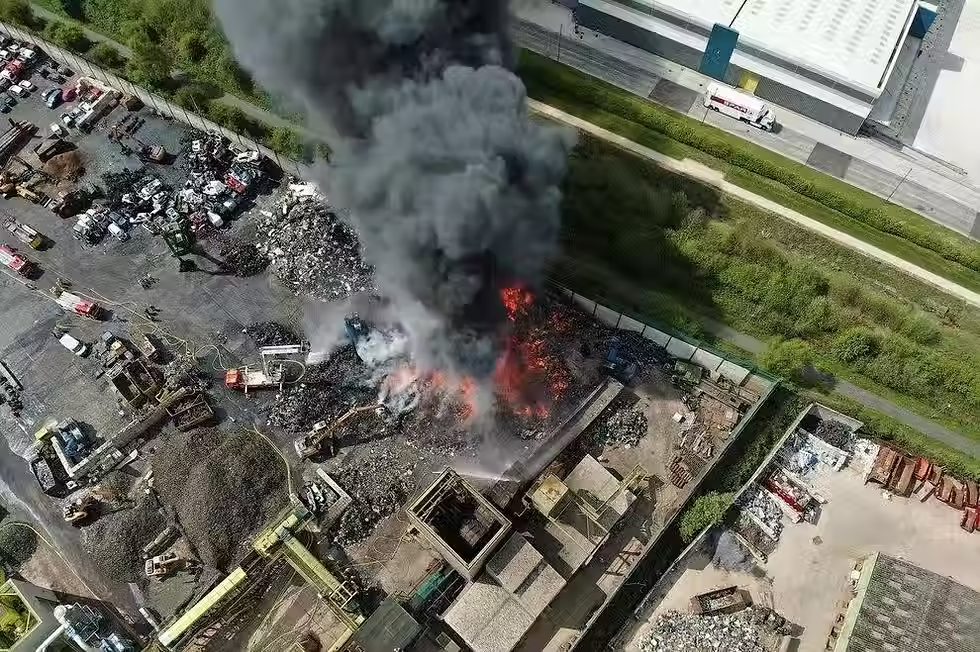
Lessons learned, best practice and experience in safely managing damaged and defective EVs should never be developed in isolation. They must be shared across the entire response chain. The goal is to learn these lessons collectively—and to learn them once. Firefighters have lost their lives tackling EV fires in confined spaces. Recovery operators have been injured while loading or transporting damaged vehicles that later reignited. Storage and salvage yards have experienced delayed thermal events leading to fires, evacuations and serious risk to staff.
Documented incidents across the UK, the United States, Germany, Norway and Australia demonstrate that these dangers are global, repeatable and far from anecdotal. Ensuring knowledge flows from roadside to recovery, from emergency response to salvage and recycling, is therefore essential if we are to reduce—or eliminate—risk, protect lives and property, and prevent avoidable environmental harm.
ELV Training has collated findings, guidance and best practice from global authorities, manufacturers, fire services, insurers and recovery organisations, bringing this knowledge together in one accessible platform. The aim is to present information in a practical, flexible online format, allowing organisations and individuals to assess it against their own roles, responsibilities and real-world activities. This training does not replace existing emergency service instruction. Rather, it complements it—extending access to those who have not traditionally received high-voltage training and ensuring that all parties involved are aligned in understanding and approach. It represents a meaningful step towards a more coordinated national and global response to EV incidents.

Rather than offering a single generic course, ELV Training provides four specialised programmes, each built on the same global evidence base but tailored to how different roles operate in practice:
1. Foundational vehicle safety awareness
2. Emergency service and first responder guidance
3. Towing, breakdown and recovery operations
4. Dismantling and recycling at the end of a vehicle’s lifecycle
For the first time, responders across emergency services, recovery, insurance and vehicle end-of-life operations have access to a clear, globally informed training pathway—one that promotes shared learning, improves consistency and better prepares those on the front line to respond safely, confidently and effectively.
Learn more at www.elvtraining.com


Comments